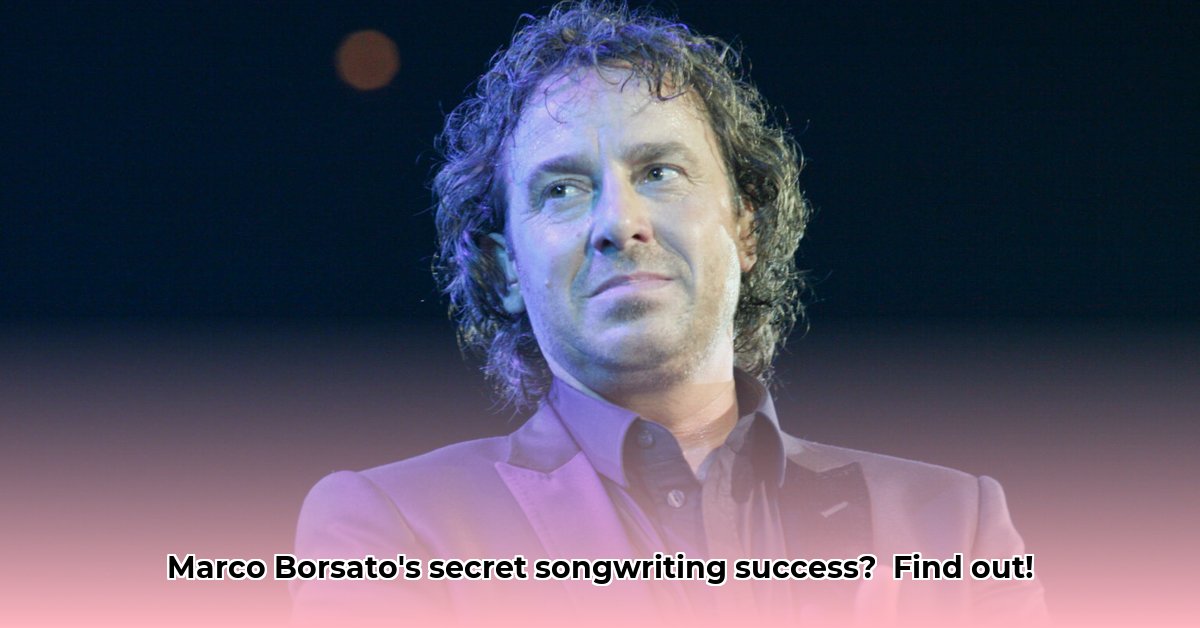
Tekstschrijver Marco Borsato: Unpacking the Ewbank Magic – A Story of Hits and Headlines
Marco Borsato, a name synonymous with jol (joy) and trots (pride) in the South African music scene (and indeed, the Dutch one!), owes a significant portion of his remarkable success to the prodigious talents of John Ewbank. Their partnership forged a string of chart-topping hits, transforming Borsato into a veritable icon. However, this seemingly idyllic collaboration wasn't without its share of drama and controversy, painting a vivid picture of triumph, tribulation, and the complexities of creative partnerships. Let's delve into the story of their collaboration – a blend of magic and mayhem.
Their collaboration wasn't a fleeting encounter, but a long-term, deeply influential relationship that reshaped the landscape of Dutch popular music. The sheer volume of number-one hits they generated is astounding, a testament to their creative synergy. Picture this: packed stadiums resonating with roaring applause, countless awards glistening under the spotlight – these are the hallmarks of their collective success. The electrifying atmosphere at a Borsato concert, driven by Ewbank's infectious melodies and heartfelt lyrics, is a tangible outcome of their remarkable partnership. But beyond the glittering accolades and sold-out venues lies a more intricate reality.
While precise figures regarding album sales and streaming data are unavailable, the impact is undeniably colossal. Their work redefined the possibilities within the Dutch music scene, establishing new standards for production value and songwriting. This phenomenal success, however, is overshadowed by a lingering controversy – the Koningslied incident.
The Koningslied, a song commissioned for a Dutch royal celebration, became the epicentre of a major storm. Accusations of plagiarism, specifically drawing comparisons to Matt Redman's 10,000 Reasons, erupted into a full-blown controversy. The striking similarities between the melodies sparked intense debate, raising profound questions about artistic integrity and copyright. The public mood shifted dramatically from euphoric celebration to bitter outrage. This pivotal moment begs the question: did the negative fallout from the plagiarism accusations outweigh the initial success of the Koningslied? The answer remains a subject of ongoing debate.
However, Ewbank's influence stretches far beyond his work with Borsato. His incredible versatility as a prolific songwriter and producer, collaborating across genres with many artists, showcases his mastery. His impact transcends his partnership with Borsato, highlighting his significant role in the Dutch music industry.
To fully appreciate this collaboration, we need an objective perspective, acknowledging both its immense highs and its considerable lows:
| Aspect | Positive | Negative |
|---|---|---|
| Commercial Success | Numerous platinum albums, countless chart-toppers, setting unprecedented benchmarks for success in the Dutch music industry. | Precise sales figures remain elusive, preventing a complete quantification of their commercial impact. |
| Creative Synergy | A potent creative partnership, resulting in a unique and instantly recognizable sound. | The Koningslied controversy casts a long shadow, raising serious ethical questions about originality and songwriting practices. |
| Public Perception | Initially commanding immense popularity and a reputation for producing high-quality, emotionally resonant music. | The Koningslied incident significantly eroded public trust and confidence. |
| Long-term Sustainability | Borsato's enduring popularity and Ewbank's diverse musical portfolio ensure a lasting legacy. | Future projects may face skepticism due to the lingering effects of the Koningslied controversy. |
The Ewbank-Borsato narrative is far from complete. It's an ongoing story, a captivating case study in the intricate dynamics of creative partnerships. It underscores the critical importance of ethical practices in the music industry and the far-reaching consequences of neglecting them. While some believe the Koningslied controversy irrevocably tarnished their legacy, others argue that the sheer volume of their successful songs outweighs this singular event. The ultimate impact remains a topic of continuous debate, showcasing that even monumental achievements are not immune to the shadows of controversy. The future may see renewed emphasis on transparency and originality from both artists, potentially reshaping public opinion. Regardless of future developments, the Ewbank-Borsato collaboration stands as a compelling tale of ambition, success, and the consequences of creative choices.
Avoiding Plagiarism Accusations in Music Production: A Legal Perspective
The vibrant Dutch music scene, while innovative, is not immune to the issue of plagiarism. For artists, particularly those collaborating frequently, understanding how to legally avoid plagiarism accusations is paramount. This extends beyond mere legal compliance; it's about safeguarding creative integrity.
Protecting Your Musical Creations: A Multifaceted Approach
Dutch copyright law, like most jurisdictions, automatically protects original musical works from the moment of creation. However, ownership and enforcement are distinct concepts. Proactive steps are essential.
Registration: Registering musical compositions with the Benelux Office for Intellectual Property (BOIP) provides irrefutable proof of ownership and creation date.
Documentation: Meticulously document the creative process, including notes, sketches, and early recordings, to provide compelling evidence.
Contracts: Collaborations require crystal-clear contracts outlining contributions, ownership, and usage rights.
Sampling & Interpolation: Using samples or interpolating melodies necessitates permission from copyright holders. Ignorance is not a valid excuse.
Navigating the Grey Areas: Inspiration and Originality
The line between inspiration and plagiarism can be blurred, especially in collaborative projects.
Attribution: Always credit collaborators, even for minor contributions, to establish clear creative boundaries.
Joint Ownership: For equal contributions, clearly define joint ownership in the contract.
Independent Creation: Ensure the work isn't overly reliant on other artists' existing work.
Responding to Accusations: Practical Steps
Even with precautions, accusations might arise.
Legal Counsel: Seek advice from an intellectual property lawyer.
Evidence: Compile all relevant evidence to demonstrate the independent nature of your creative process.
Negotiation: Consider out-of-court settlements, always with legal counsel.